This website uses cookies to ensure that you have the best possible experience when visiting the website. View our privacy policy for more information about this. To accept the use of non-essential cookies, please click "I agree"
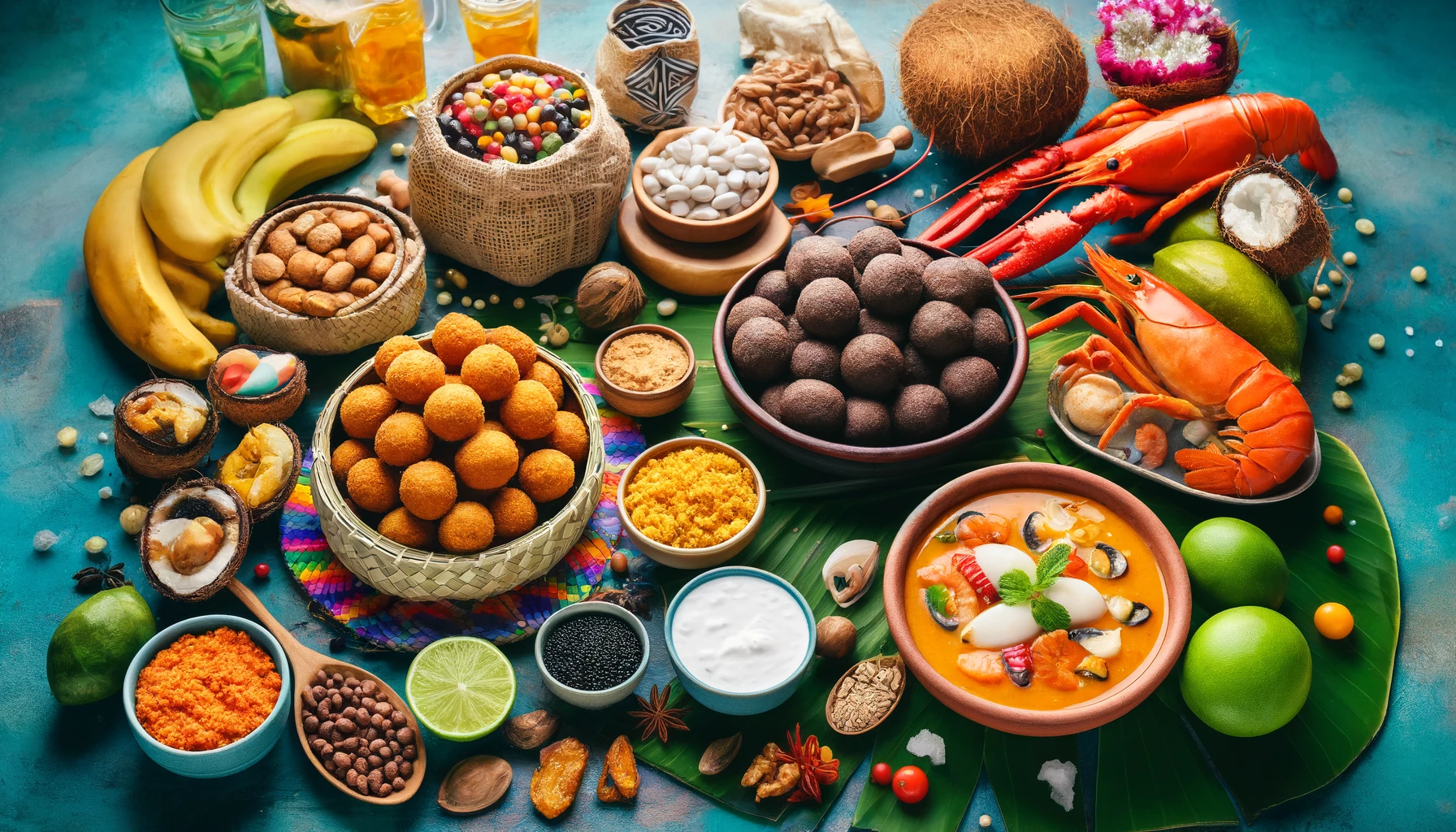
Abará is a popular Bahia Brazilian snack consisting of black-eyed peas or beans that are mashed into a paste, then steamed in a banana leaf and stuffed with vatapá, caruru and shrimp.
Acarajé
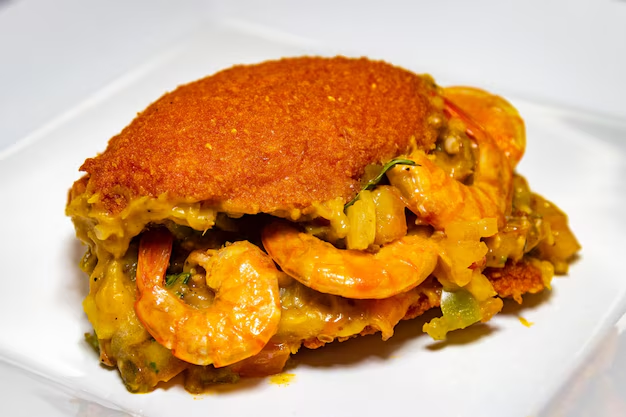
Traditional street food from Bahia Brazil, these deep-fried black-eyed pea fritters are split and stuffed with vatapá, caruru and shrimp.
Moqueca baiana
Moqueca is a Brazilian fish stew made with various kinds of seafood, coconut milk, tomatoes, onions, garlic, fresh cilantro and dendê oil.
Vatapá
Vatapá is a dish of African origin that became very popular in Bahia. The base of the recipe is a paste of stale bread, roasted peanuts, cashew nuts, shrimp and dendê oil. The vatapá also goes very well accompanied by an acarajé and pepper sauce.
carurú
Caruru is a Bahia Brazilian dish made from okra, onion, shrimp, dendê oil, and toasted nuts like peanuts or cashews. The word "caruru" is pronounced "kaɾu'ɾu" in Brazilian Portuguese.
Bobó de camarão
Bobó de camarão, sometimes referred to as shrimp bobó in English, is a chowder-like Brazilian dish of shrimp in a purée of manioc meal with coconut milk, herbs, ginger, and other ingredients.
Feijoada Baiana
Feijoada baiana is a type of feijoada, Brazil's national dish, which is a stew of black beans or pinto beans and various meats. The name feijoada comes from the Portuguese word feijão, which means "bean". Feijoada is often served with sides like rice, farofa, sautéed greens, and orange slices.
A sweet originating from the Iberian Peninsula, made from milk, eggs and sugar. It is one of the most typical sweets in the country's cuisine. In the northeast of Brazil, it is also known as "egg candy", or polka dot milk candy, due to the shape it has when ready for consumption.